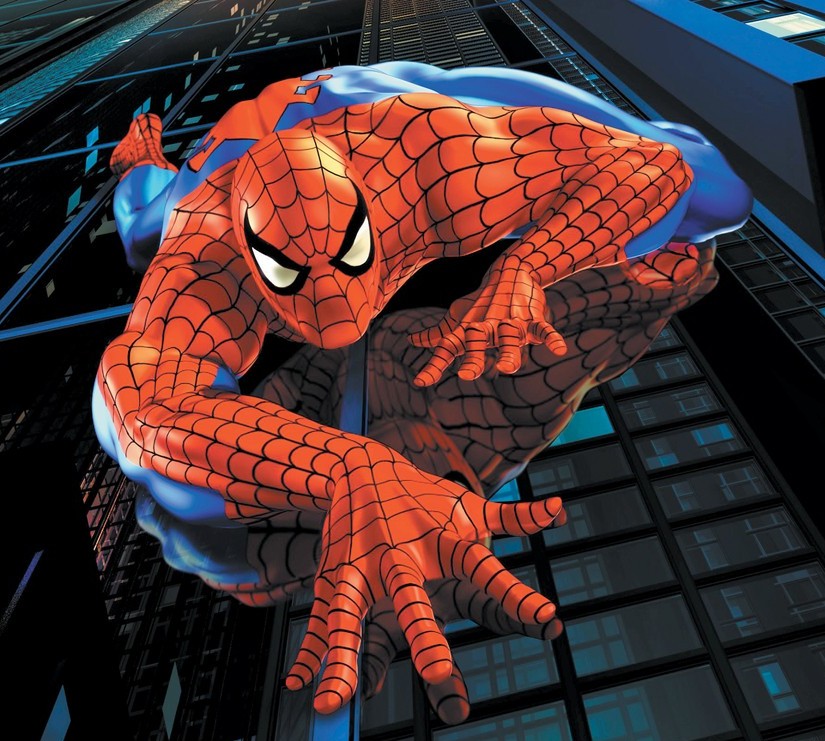
 I particularly liked how Peter Parker went to school and worked just like I did. He was even teased on occasion by his peers, something every child can relate to. Peter was my role model, which is why I made darn sure to be in front of my old television set at 3:30 pm every weekday.
It's amusing to think of my childhood friends who had superhero action figures, bed sheets and lunchboxes. What is it about these superhuman figures that is so attractive? Is it their ability to overcome life's hardships and succeed against all odds, or is it their superhuman traits that empower them and grant them dominion over all of their enemies? Whatever it is, kids are captivated by characters like the Wolverine, Batman and the Power Rangers.
The text defines traditional icons as figures who have been "mythologized into larger-than-life symbols that capture our imagination by embodying our deepest values and desires." In this light, can fictional characters such as Spiderman be considered icons? Also, what could be the effects of a rising generation whose fictional icons actually do not exist in the real world?

38 comments:
I think they definitely can be considered icons. As the author said they overcome odds and are great role models. As to their being fictional, I don't think it detracts from the lessons we learn from them. Being able to still admire Spiderman and others despite realizing they are fake is just like keeping the spirit of Santa Claus alive after realizing he doesn't exist either.
A world without icons would be interesting. Maybe our icons would be the people around us who are good role models. I think this outlook could potentially change our world for the better. We would have a realistic notion of everyday heroes and maybe more people would be influenced to do good because of the example of others.
I definitely think fictional characters can be considered icons. Look at the movies that have been coming out in the past few years, the most popular movies today are superheroe movies! They're just awesome. I like what Brenton said, even though they are not real, you can still learn the lessons that are taught.
Definitely. Fictional characters can be considered icons! Some of them are more popular than any real person or icon that exists today.
I agree with the above comments, fictional characters can definitely be considered icons, especially to children. They embody everything they value and desire and just make them say "woooow." I think they can still learn lessons from fictional characters, even though they're not real.
Dude! Crazy that you posted this- because I was going to comment about spiderman in the class discussion on wednesday but didn't. And I wrote him on my list of heroes.
Superheroes are definitly icons.
Superman, batman, spiderman, captain america,...
Which reminds me.. I just saw a movie about superheroish people called "Push" and it was LAME. So everybody, save your money. Wait till it's in the dollar theater at least.
I guess I would say that fictional characters could be icons because to a lot of people they are. I think if they're promoting good things that it's important for kids to look up to them because most kids will figure out that they're not real, but it's definitely something that they can still look up to.
I definitely think that superheroes are icons, for all of the above mentioned reasoned. As to the potential argument that they are fictional, my question is, are they any more fictional than the "real" icons? For example, the text discussed Marilyn Monroe as one of THE American icons. But really, is Norma Jeane Baker and the character she showed to the public any less fictional than Spiderman?
Yes fictional characters can be icons. If batman did not reach icon status after he caught the joker and took the blame for the two face guy then no one will ever reach icon status again.
I agree with Megan. Fictional characters can definitely be icons, but it is important for them to consistently be teaching good values and morals. Although there will come a time when they realize it's not real (hopefully sooner than later), there are still a lot of important lessons that can be learned by these characters.
Yea, I think that fictional characters can be considered icons. Most of my heroes growing up were fictional. I think for the raising generation to have fictional iconic heroes is fine as well. However, I get your question--what if they ONLY had fictionalized heroes? Growing up I had a good combination of real-life role models and fictional heroes. For kids in the future they'll also need a good combination of real-life heroes and fictional heroes.
Superheroes can be icons. Absolutely. They do teach lessons, give us a basis for good and evil. Knowing that a character isn't real in actuality will probably not make us stop referencing them, and wanting to be like them. They stand for certain things that we too associate ourselves with.
Historically, doesn't every culture have 'fictional' or 'mythical' icons? It seems that's the stuff folklore is made of. The difference is in the modern media used to convey the messages about these mythical icons. Instead of oral traditions and written stories, we had/have tv and movies. But beyond all that, there's one thing that seems quite disconcerting. All our mythical icons are now commercialized. They not only inspire us, but ask us to buy something two (such as a lunch box with their face on it). Could that have any negative effects on the psyche of a kid?
Fictional characters are often viewed as icons. Especially in the eyes of little kids. They admire and look to these characters as their own personal heroes. I think that in this rising generation who realize sooner that their fictional characters aren't real won't have too much of an effect.
Spiderman as an icon? Definitely. Even though Spiderman is a fictional character, I think he and other characters have become "larger than life" so to speak. I see nothing wrong with fictional icons as long as they have good standards that inspire others to become better.
I think superheroes can be considered icons. I think we can and should look up to them. Often our fictional characters, like Spiderman, start out just like us as Peter Parker. I think more people are turning to fictional icons more lately. Fictional characters can't let you down. They don't have a life outside of their heorism so we can't see their "celebrity" mistakes. So if they are doing great things when we see them why not look up to them?
I think fictional heros and icons become apart of our lives much more often then we realize. Spiderman may be obvious example, but what about the fictional characters from television shows such as The Office? These larger then life characters become a type of hero that many often mimic. We have all heard about a Star Wars convention, but do people like "Jim" have there own everyday convention? How many students did you see at BYU that dressed up like Jim from The Office for Halloween? I saw at least three. How many people were using the phrase "that's what she said" before The Office originally aired?
I dont see anything wrong with fictional icons. It comes to a point where every child can realize that icons are fictional but even if they are fictional they can still treat correct principles.
a skewed perception of reality. Or, just great imaginary thought processes.
In every child's imagination, they too can someday be like their superheroes. Whether fiction or not, an icon is someone we look up to for direction. Even if they're not real (i.e Spiderman), they may still have an impact and are iconic none the less.
Yes, these characters can certainly be considered icons. They have such an impact on people even though they are fictional. I agree with the above comments, that these characters can teach very valuable lessons.
I think its great to have fictional icons that don't actually exist because they will never let you down! All my icons growing up were cartoon characters that I idolized.
Yes, they have become icons. And I also feel that in most cases fictional icons do more good than harm. Granted, they could encourage unrealistic expectations, but the messages they normally send are sound and encouraging.
I think fictional characters can be just as much an icon as a real person. They are both portraying characters, people know who they are and look up to them, and they will be remembered. I think they can both teach good lessons and be icons.
In the text, it mentions that heroes do not have to be real. in that sense, i think these super heroes can be defined as legitimate heroes and not just icons. i don't think it is wrong to have fictional heroes — after all, the are less likely to let kids down that real-life heroes
I do believe that superhero's can be icon's. I used to collect comic books in my youth and I probably worshiped them more than any athlete or movie star at the time. However, I do believe that it has an interesting affect growing up worshiping fictitious characters or icons. I am sure all of us are guilty of wishing we were teenage mutant ninja turtles at one point in time. However, I think with age we all mature and long to become someone more human and realistic that we can relate to.
The fact that they aren't real does not bother me. I like that they have in them moral values, they are always trying to do what is right. And even though these characters are not real, I think they can teach a lot to the rising generation.. The only problem I could think of is that this generation when realizing that these icons are not real, may believe that the moral they stand for are also not achievable, and they may lose faith in these morals.
I would say that fictional characters can be considered icons. However, the trouble with this is that when kids grow up they realize more and more that the character they believed in isn't real. They may struggle finding real people that measure up.
The character of Batman is one of the best superhero icons out there. He is a man with no super hero powers but has been well trained and is causing fear on his enemies. He is a symbol of hope to the people of his town. He is trying to show the people of Gotham that crime should not be tolerated.
I think we enjoy these heroes for two reasons. One - their stories are presented for entertainment. Their TV shows, movies, and comic books are all forms of communication that qualify as entertainment. Two - they fight, are strong, have powers and change the world, all things that most of us have wanted to do/have at sometime in our lives. We feel better because of the hero.
They definitely should be considered icons. Just because they are fictional doesn't mean they can't be used to teach important lessons. For example, belonging (all the mutants have a place to go and belong in X MEN), or being nerdy (i.e. peter parker's cheesy comments). I'd much rather have our children look up to fictional superheroes who fight to defend and protect people then real life 'heroes' in the media who get DUI's, are in and out of jail and live promiscuous lifestyles. Besides, wolverine is just the best...especially when played by hugh jackman.
I think that fictional characters can definitely be considered icons. Just because they don't actually exist in the real world doesn't mean that they cannot embody societies deepest held values and ideals.
By the definition of icon that was provided in this blog entry from the text, super heroes definitely seem to fit the mold. They are larger than life and when we are kids we think it would great to be like them. Having these unrealistic ideals impact us in perhaps both positive and negative ways. The negative comes as a result of not achieving these super human feats and feeling inadequate with ourselves. The positive comes from having such "perfect" and idealistic heroes. We know what is good and what is evil. We want to help and save others. We want to be as strong and skilled as possible.
YES. I think it may even be advantageous because you know a cartoon character isn't real and, therefore, don't expect reality from said character. The letdowns become more scarce.
Although kids these days have idols that aren't very idyllic, I don't think it's a big deal that their idols are fictitious. Spiderman is iconic. As are Batman, Superman and any other superhero. We all grow up and know that these folks aren't real.
I think having fictional characters can help put all of the qualities you aspire to into one place. Now if anyone becomes famous, everyone else looks for their flaws. Anything that they may have done wrong in the past comes to light. By having a fake person as an icon, it represents the ideal you seek.
i think it can. spiderman represents a lot of what we as people hope to live up to, even though we are fallible. unlike us however, spiderman can represent and put forth all of those traits.
Spiderman can be considered an icon in society because he is very well known and loved by millions, hence the success of the movies. I think people can differentiatiate between a cartoon character and someone of worth who is an actual hero
Post a Comment